

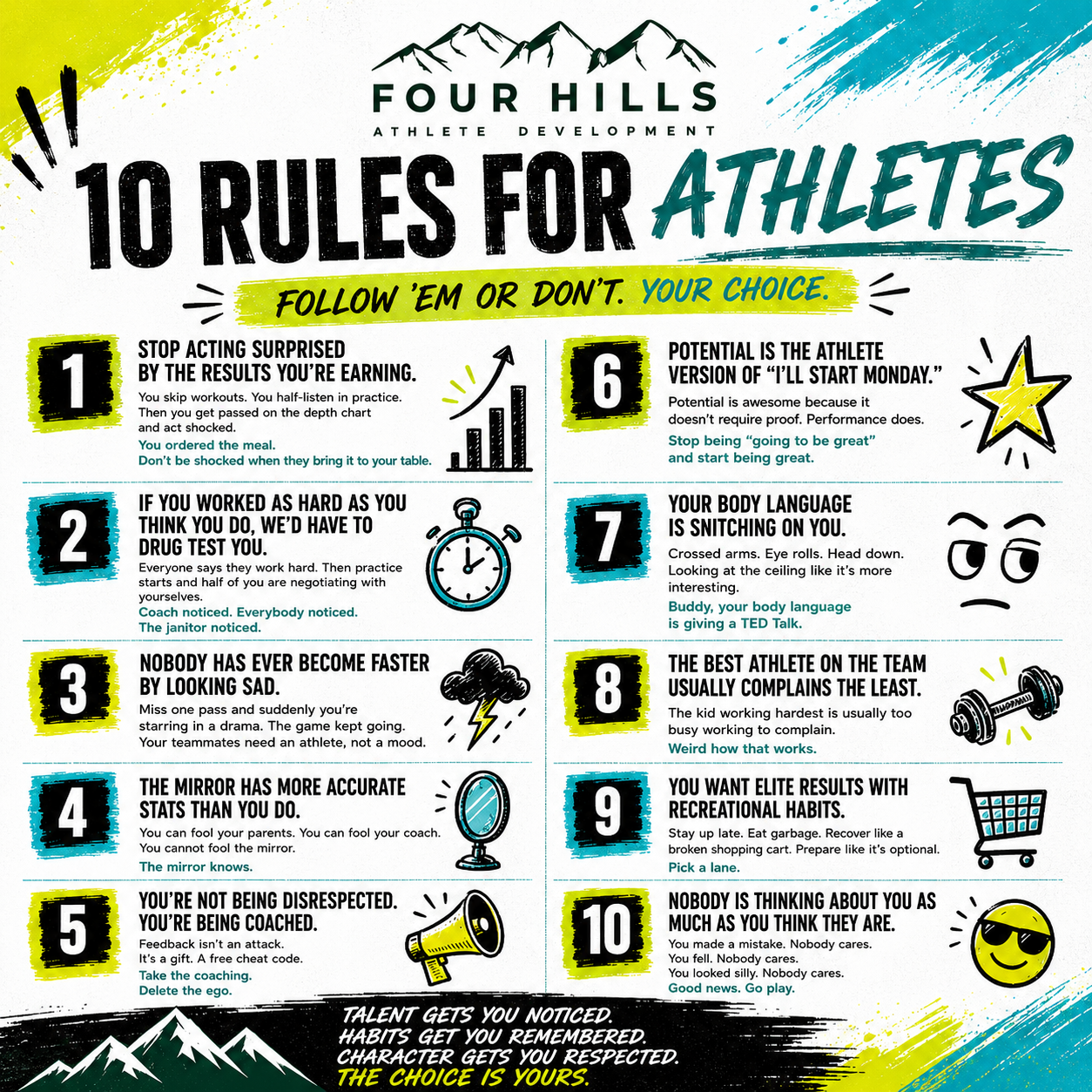
10 Rules for Athletes
Every athlete says they want to get better. Fewer athletes are willing to hear the truth required to get there.
The Four Hills Rules for Athletes is not about talent, rankings, ice time, playing time, scholarships, draft picks, or statistics.
It is about the habits, attitudes, and behaviours that separate athletes who grow from athletes who stay stuck.
Some of these rules will make you laugh. Some will make you uncomfortable. A few might feel like they were written specifically about you.
Good.
Growth usually starts where comfort ends.
Read them. Argue with them. Disagree with them if you want.
But before you do, ask yourself one question:
Are you upset because the rule is wrong, or because it is right?
Keep the standard high.
Keep the ego low.
Keep getting better.
Every single day.
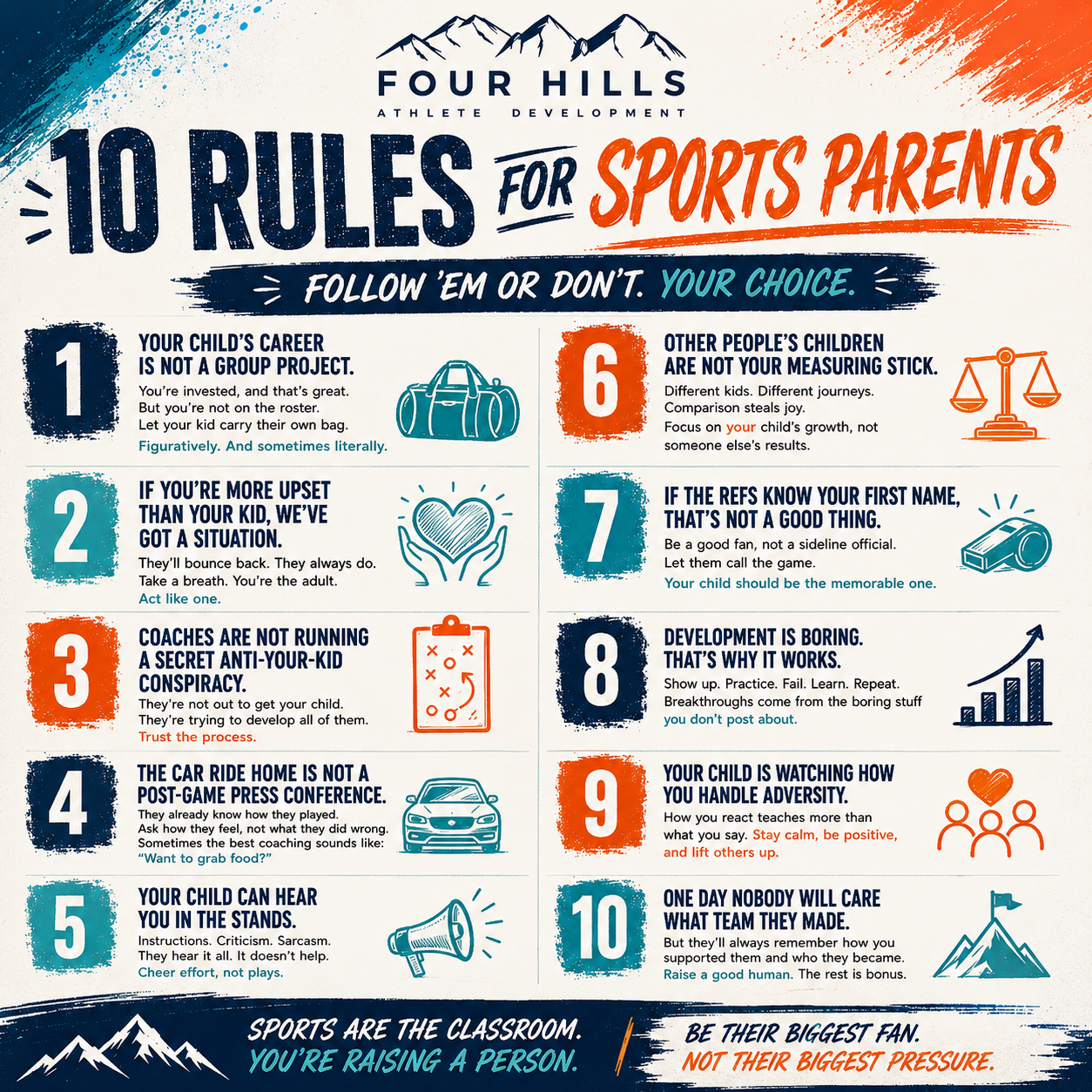
10 Rules for Sports Parents
Being a sports parent is one of the hardest jobs in youth sports. You care deeply. You invest your time, your money, your weekends, and a piece of your heart into every season. That is exactly why it is so easy to lose sight of what matters most.
The Four Hills Rules for Sports Parents is not about raising better athletes. It is about raising better people through sport. It is a reminder that the car ride home matters. Your reactions matter. The way you handle adversity matters. The way you talk about coaches, officials, teammates, and other families matters. Your child is learning far more from what you do than what you say.
Some of these rules will make you smile. Some might make you laugh. A few might hit a little too close to home. That's okay.
The goal is not to be a perfect sports parent. The goal is to create an environment where your child can grow, fail, learn, and love the game. Because one day nobody will remember what team they made. They will remember how the people around them made them feel.
Be their biggest fan. Not their biggest pressure.
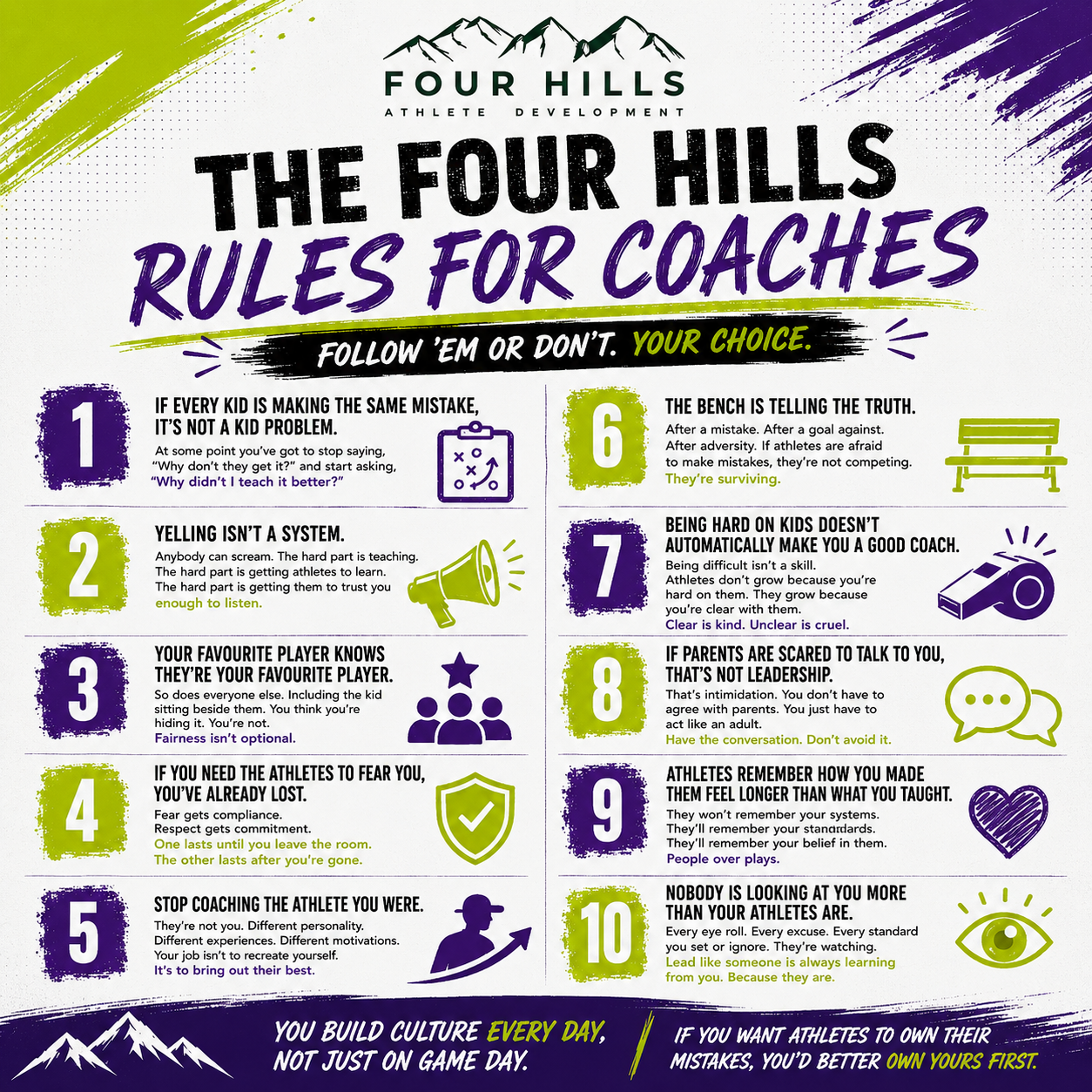
10 Rules for Coaches
Coaching is one of the few jobs where everyone thinks they can do it better from the stands.
The Four Hills Rules for Coaches is not about systems, tactics, drills, or game plans. It is about leadership. It is about culture. It is about the standards you set and the standards you accept.
Athletes are always watching. They notice how you respond after mistakes. They notice how you treat the last player on the roster. They notice whether your actions match your words.
The truth is that athletes will forget most of the systems you teach. They will not forget how you made them feel. Some of these rules might make you laugh. Some might make you uncomfortable. A few might feel like they were written after one of your practices.
Good.
The best coaches never stop learning. They never stop reflecting. They never stop looking in the mirror before looking for someone else to blame. Because coaching is not about creating athletes who depend on you. It is about developing people who no longer need you.
Build culture every day. Lead with consistency. Coach the person before the player. The scoreboard keeps score of the game.
Your athletes keep score of your leadership.
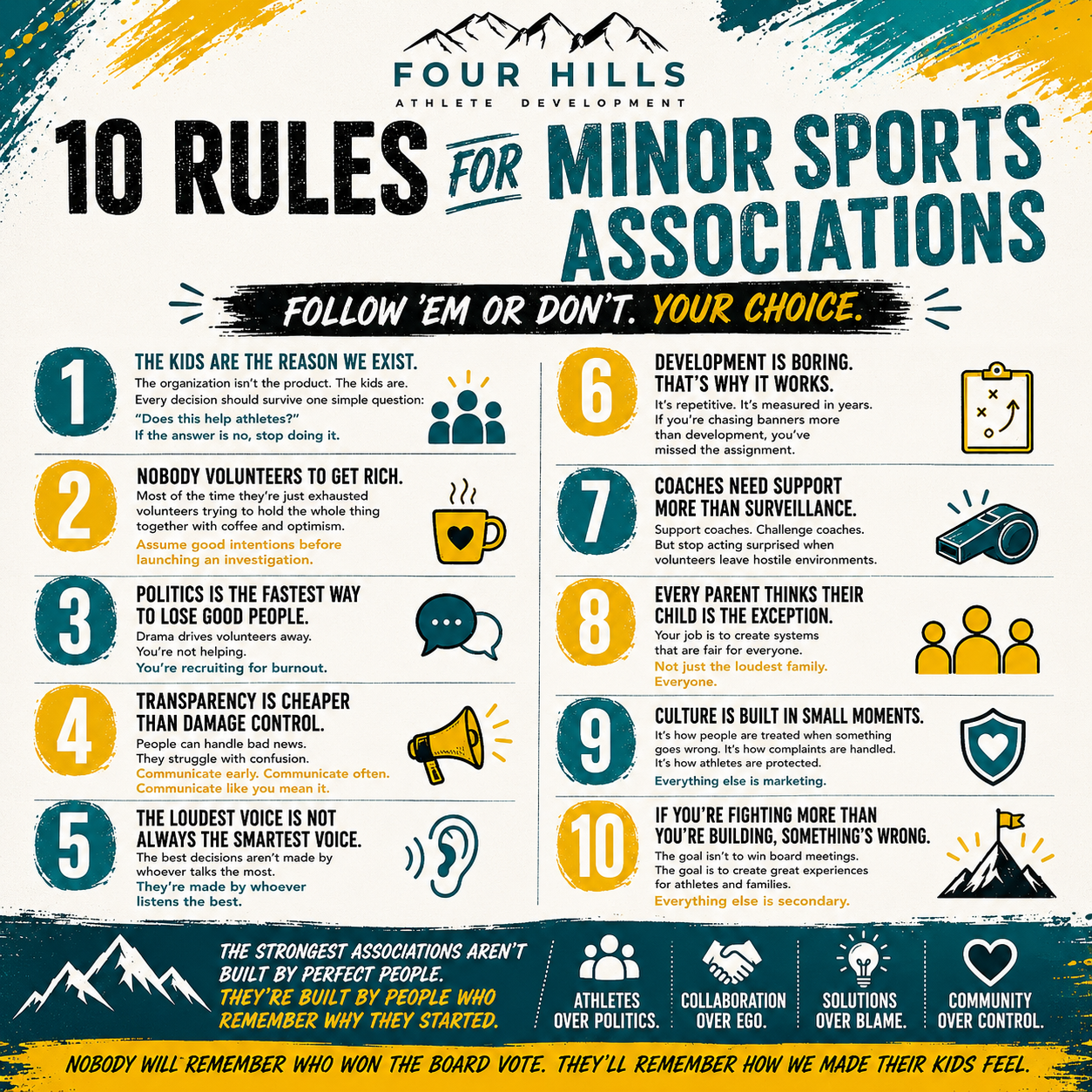
10 Rules for Minor Sports Associations
Minor sports associations are built by people who care enough to give up evenings, weekends, vacations, and a whole lot of sanity for the next generation of athletes. Most of them are not looking for recognition. They are simply trying to make things better than they found them.
The Four Hills Rules for Minor Sports Associations is not about governance, policies, budgets, or board meetings. It is about purpose. It is about remembering why the organization exists in the first place. The kids. Not the politics. Not the agendas. Not the personalities.
The kids.
Some of these rules will make you nod your head. Some might make you laugh. A few may feel uncomfortably familiar if you have ever sat through a board meeting, read a heated email thread, or navigated a season of competing opinions.
Good.
Healthy organizations are built on honest conversations. The strongest associations are not the ones with the fewest problems. They are the ones that keep choosing collaboration over ego, transparency over confusion, and solutions over blame.
At the end of the day, nobody will remember who won the board vote. They will remember the experience we created for athletes and families.
Keep the focus on the kids. Everything else gets easier from there.